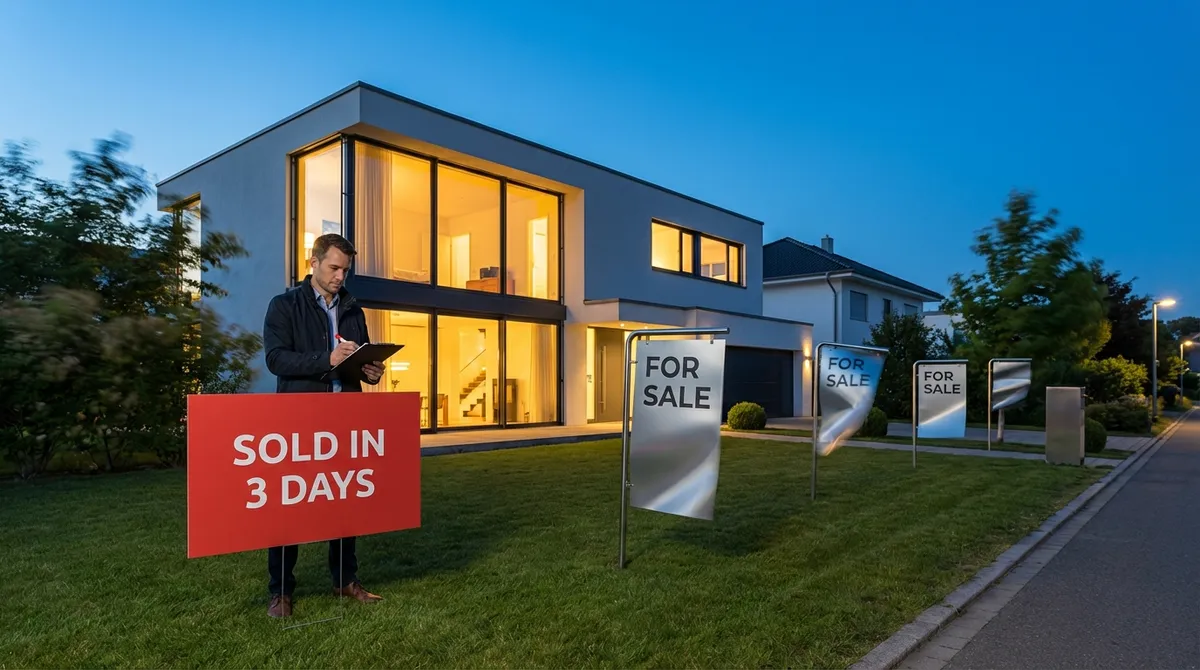
Engineer Your Launch: Treat Listing Day Like a Product Launch
Most sellers casually list their home and “see what happens.” High-performing sellers plan their launch like a product release. The weeks before you go live are where speed and success are actually built.
Start with a clear launch date and work backward 2–4 weeks. Use that time to complete critical pre-listing tasks: minor repairs, fresh paint in key spaces (entry, kitchen, primary bedroom), deep cleaning, decluttering, and landscaping refresh. Focus on high-ROI, low-cost updates that improve first impressions: replace outdated light fixtures, upgrade hardware on cabinets, and add modern house numbers or a new mailbox.
Next, create pre-market buzz. Your agent can quietly market as a “coming soon” listing to their buyer network and on select platforms where allowed. Capture professional photos and, if possible, a short lifestyle video before the listing is public. Aim to schedule showings and an open house within the first 48–72 hours of going live so interest is concentrated, signaling demand to buyers watching the market closely.
Consider timing your launch for maximum eyeballs. Many buyers search hardest late in the week and on weekends, so listing on a Wednesday or Thursday often helps front-load showings into the first weekend. The objective is simple: compress attention into a short window to generate multiple interested buyers quickly, rather than letting your listing linger and go stale.
Turn Your Home Into a Product: Strategic Staging and Positioning
Buyers aren’t just buying square footage; they’re buying a story of how they’ll live in the space. Strategic staging turns your home into a product that photographs better, shows better, and sells faster—and often for more.
Begin by removing 30–40% of visible items in your home. Excess furniture, personal photos, bold decor, and crowded shelves all make rooms feel smaller and distract buyers from the home’s features. Pack early; think of it as starting your move ahead of time. The goal is light, open, and neutral, not sterile—add a few intentional touches like fresh plants, neutral throw pillows, and crisp bedding.
Stage key value-driving rooms first: the entryway, living room, kitchen, primary bedroom, and main bathroom. In each space, define a clear focal point. In the living room, orient furniture around natural light or the fireplace, not the TV. In the kitchen, clear counters except for one or two quality items (e.g., a coffee setup, a wooden cutting board with a plant). In the primary bedroom, use neutral bedding and make the bed look like a hotel’s—this instantly upgrades the feel of the entire room.
Then align your positioning with your target buyer. If your likely buyer is a young professional, stage an extra bedroom as a home office. Near schools? Highlight a homework nook or organized mudroom. Your staging should reinforce the narrative your listing description and photos will tell: “This home is exactly what you’ve been looking for, ready right now.”
Control the Narrative Online: High-Impact Photos, Video, and Listing Copy
Most buyers decide whether to see your home in the first 5–10 seconds of viewing your online listing. That means your digital presence is your first—and sometimes only—showing. Invest in making it unmissable.
Professional photography is non-negotiable if you want speed and strong offers. Demand wide-angle, well-lit shots that show the flow of each room, not random close-ups. Ask for twilight exterior photos if your home looks great at night. Include floor plans if possible; buyers crave layout clarity and often skip listings that leave it ambiguous.
Add a short, well-edited video tour or walkthrough. This doesn’t need to be a high-budget production, but it should feel smooth, intentional, and comprehensive. Post clips across social platforms—Instagram Reels, TikTok, Facebook, and YouTube Shorts—with hooks like “Walk through this move-in ready [city] home priced under [key price point].” The goal is to widen your buyer pool beyond traditional listing sites.
Your listing description should be written like persuasive marketing copy, not a dry feature list. Lead with the biggest value drivers: school district, walkability, recent upgrades, low-maintenance yard, or energy-efficient systems. Use benefit-driven language: “Cut your commute to under 20 minutes,” “Host gatherings in an open-concept main floor,” or “Move-in ready with major systems already updated.” Close with a clear call to action and urgency: “Offers will be reviewed on [date]” or “Schedule your showing this week before it’s gone.”
Use Pricing as a Demand Engine, Not a Guessing Game
Fast, profitable sales rarely come from “testing high and seeing what happens.” Instead, top sellers use pricing as a deliberate strategy to attract maximum qualified buyers quickly, then let competition push the final number.
Start with data, not emotion. Review recent comparable sales within the last 60–90 days that match your property’s location, size, condition, and features. Adjust for meaningful differences like additional bathrooms, finished basements, or significant renovations. Your agent can provide a comparative market analysis (CMA); treat it as your baseline reality, not a suggestion.
If your market is competitive, consider pricing slightly below the mid-range of your comps to position your home as the best value in its category. This doesn’t mean undercutting yourself—it means leveraging psychology. A compelling list price can drive more showings in the first week, often resulting in multiple offers and stronger terms (shorter contingencies, higher earnest money, or even above-asking offers).
Set clear pricing milestones and rules before you list. For example: “If we don’t have at least X showings or Y serious inquiries in the first 7–10 days, we’ll adjust the price by Z%.” This pre-commitment prevents emotional, slow-to-react decisions that can cost you weeks. Also pay attention to pricing thresholds buyers search by (e.g., under $400K, under $500K). Being just under a major threshold can significantly increase your listing’s visibility in search filters.
Finally, think beyond price alone. If you want speed, be strategic with terms: offering flexibility on closing date, covering a portion of closing costs, or pre-inspection reports can make your listing more attractive without simply slashing the price.
Maximize Momentum With Aggressive Early-Stage Follow-Through
The first 10–14 days on market are your “golden window.” How you and your agent manage this period largely determines how fast—and how well—you sell. Momentum is a strategy, not an accident.
First, make your home extremely easy to show during that window. Approve as many showings as possible, especially evenings and weekends. Consider temporary arrangements (staying with friends/family for a few days) if constant showings would disrupt your routine. Friction kills momentum; convenience accelerates it.
Second, prioritize real-time feedback. Your agent should follow up with every buyer’s agent within 24 hours of a showing. If multiple buyers mention the same issue (e.g., pet odor, dark rooms, confusing access), address it immediately. Quick course corrections can salvage your golden window instead of waiting weeks to adapt.
Third, leverage scarcity and social proof. If interest is strong, group showings or host a well-publicized open house early on. If multiple offers are likely, set a clear offer deadline and communicate it to all interested parties. This creates urgency and can drive better terms for you. Make sure your agent updates your listing notes (and public remarks if allowed) to reflect high interest: “Multiple showings scheduled,” or “Offer deadline set for [date/time].”
Finally, maintain visibility and energy on social and listing platforms for at least the first two weeks. Share “Just listed” posts, video snippets, and reminders about open houses. If you’re not seeing traction by day 10–14, treat that as a signal, not a setback: re-evaluate price, photos, description, or accessibility. Rapid adjustments keep your listing in play while it’s still relatively fresh.
Conclusion
A fast, effective home sale doesn’t come from guesswork; it comes from a deliberate, front-loaded strategy. When you treat your listing like a launch, stage your home like a product, control your online narrative, use pricing as a demand engine, and aggressively manage your first two weeks on market, you dramatically increase your odds of selling quickly without giving up value. The key is to act like a strategist, not a spectator—plan before you list, move decisively once you’re live, and use data and buyer behavior to guide every decision until you close.
Sources
- National Association of Realtors – 2023 Profile of Home Buyers and Sellers - Provides data on how buyers search for homes, the importance of online listings, and typical time on market
- U.S. Department of Housing and Urban Development (HUD) – Selling Your Home - Offers government-backed guidance on preparing and marketing a home for sale
- Harvard Joint Center for Housing Studies – Housing Market Research - Delivers market context and trends that influence pricing and selling strategy
- Federal Reserve Bank of St. Louis (FRED) – Housing Market Data - Contains macroeconomic and housing indicators that impact buyer demand and time on market
- Consumer Financial Protection Bureau – Guide to Closing on a House - Explains the closing process and terms that can be leveraged strategically during negotiations